🇬🇧
--
London
Local Time--:--
Your Time--:-- – --:--
EUR/USDGBP/USDUSD/CHF

The London session is the highest-volume forex trading window. Average daily FX turnover was $9.6 trillion in April 2025 (BIS Triennial Survey). Track live session status, key pairs, and optimal trading times below.
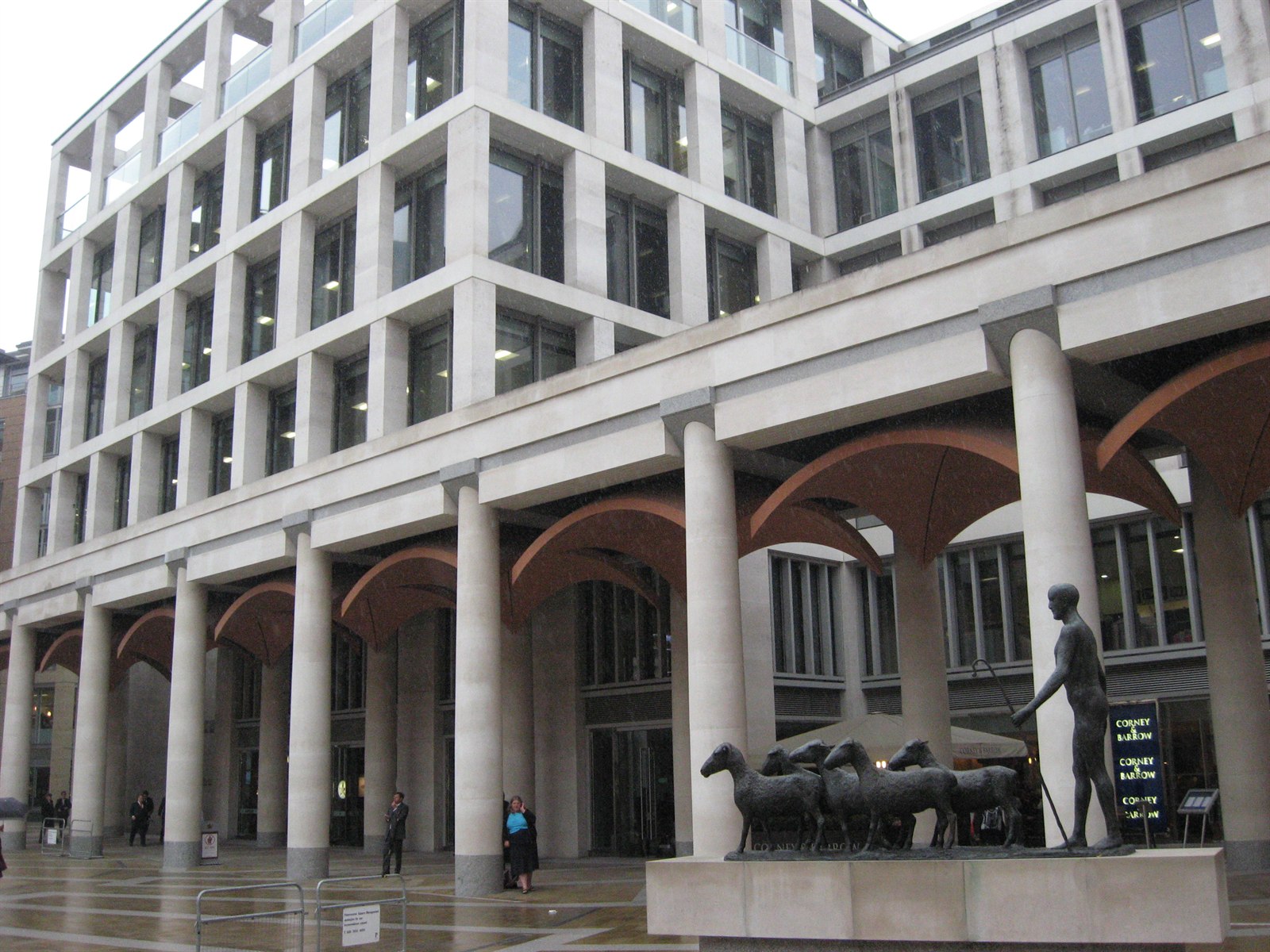
Real-time status of the London forex trading session in your timezone
The London session runs from 8:00 AM to 5:00 PM GMT (Greenwich Mean Time), corresponding to 3:00 AM – 12:00 PM EST. During British Summer Time (late March to late October), clocks in the UK shift forward one hour, which adjusts the session relative to non-observing timezones.
All times displayed on this page automatically convert to your selected timezone, including daylight saving time adjustments.
London has been the world's dominant foreign exchange center for decades. According to the Bank for International Settlements' 2022 Triennial Survey, the UK accounts for 38.1% of global forex turnover — more than the United States (19.4%) and Singapore (9.4%) combined.
This concentration of volume produces the tightest bid-ask spreads of the trading day. EUR/USD spreads during London hours regularly fall to 0.1–0.3 pips, compared with 0.5–1.0 pips during the Asian session. For traders, that translates directly to lower transaction costs and better execution quality.
The London open frequently establishes the day's directional bias. European banks, hedge funds, and asset managers enter the market with size, often breaking through ranges established during the overnight Asian session. This creates strong trending conditions, particularly in the first two hours after the open.
Volatility peaks again during the London–New York overlap (1:00 PM – 5:00 PM GMT), when both European and North American institutional desks are simultaneously active. This four-hour window accounts for over 50% of the entire day's forex volume.
The UK observes British Summer Time (BST) from late March to late October, shifting one hour ahead of GMT. The EU and US change clocks on different dates, creating brief periods where the London–New York overlap duration shifts by one hour.
This tool automatically adjusts all displayed times for DST transitions across all major timezones, so the session hours shown are always accurate.
These pairs see peak liquidity and the tightest spreads during London hours
The world's most traded currency pair. EUR/USD accounts for roughly 24% of global forex volume, and the bulk of that activity is concentrated during London hours when European Central Bank flows, interbank dealing, and institutional hedging peak simultaneously.
Sterling sees its deepest liquidity during the London session, when UK economic releases, Bank of England communications, and domestic institutional order flow converge. GBP/USD is among the most volatile major pairs, with average daily ranges often exceeding 100 pips.
A pure European cross that trades almost exclusively during London hours. EUR/GBP is driven by monetary policy divergence between the ECB and the Bank of England, making it particularly responsive to rate decisions and inflation data from either jurisdiction.
The Swiss franc is closely tied to European market activity. USD/CHF tends to move inversely to EUR/USD and offers an alternative for traders seeking USD exposure during the London session, with the Swiss National Bank's policy stance adding an additional driver.
A lower-volatility European cross favored by range traders and carry strategies. EUR/CHF liquidity is concentrated in London hours, and the pair is sensitive to SNB interventions, Eurozone periphery risk, and safe-haven flows into the franc.
High-impact releases that regularly move European and global currency markets
European Central Bank monetary policy announcements, typically at 1:15 PM CET, followed by a press conference at 1:45 PM CET. These events drive EUR pairs with immediate volatility across EUR/USD, EUR/GBP, and EUR/CHF.
Bank of England interest rate announcements at 12:00 PM GMT. GBP/USD frequently moves 50–100 pips in the minutes following the decision, particularly when accompanied by changes in the Monetary Policy Summary.
Consumer Price Index and labour market data released at 7:00 AM GMT by the Office for National Statistics. Inflation surprises in either direction can set the tone for GBP pairs for the remainder of the London session.
Purchasing Managers' Index data (released at 9:00 AM GMT) and quarterly GDP figures provide a snapshot of Eurozone economic health. PMI readings above or below 50 signal expansion or contraction, directly influencing ECB rate expectations and EUR pairs.
Approaches that capitalize on the session's unique characteristics
The London breakout is one of the most widely used intraday strategies in forex. The premise is straightforward: during the lower-volatility Asian session (midnight to 8:00 AM GMT), price often consolidates into a defined range. When London opens, the surge in institutional volume frequently drives a decisive move through one side of that range.
Traders implementing this strategy typically identify the Asian session high and low on a 15-minute or 1-hour chart, then place pending buy-stop and sell-stop orders just outside the range boundaries. The trade is triggered by the London open's momentum, with stops placed on the opposite side of the range. The strongest breakouts tend to occur in the first 90 minutes of the session.
Key considerations: Filter for days with scheduled European economic releases, as these increase the probability of a sustained breakout. False breakouts are more common on days with thin calendars.
The WM/Reuters London fix at 4:00 PM GMT is a daily benchmark rate used by institutional investors worldwide. Pension funds, central banks, and index-tracking funds use this rate to value cross-border portfolios and execute currency hedges.
The fix creates predictable order flow patterns. Large buy or sell orders are accumulated and executed in a narrow window around the fixing time, causing sharp, often temporary price spikes. Month-end and quarter-end fixes tend to produce the largest moves, as portfolio rebalancing flows increase significantly.
Retail traders should be aware of fix-related volatility. Entering positions in the 15 minutes before and after 4:00 PM GMT carries elevated risk of adverse fills. Some traders specifically target the post-fix reversion, fading the spike once the fixing orders have been absorbed.
The London session opens at 8:00 AM GMT and closes at 5:00 PM GMT. In US Eastern Time, that corresponds to 3:00 AM – 12:00 PM EST. During British Summer Time (late March to late October), clocks shift forward one hour, adjusting the session relative to timezones that do not observe DST on the same schedule.
London handles approximately 38% of global daily forex volume, according to the Bank for International Settlements. Its geographic position allows it to overlap with both the Asian and North American sessions, and its deep pool of institutional participants — including major banks, hedge funds, and sovereign wealth funds — produces the tightest spreads and the most consistent trending conditions of any session.
EUR/USD, GBP/USD, EUR/GBP, USD/CHF, and EUR/CHF see the most activity. EUR/USD alone accounts for roughly 24% of global forex volume, with most of that concentrated during London hours. GBP/USD and EUR/GBP are particularly liquid due to the direct involvement of UK-based institutions.
The London breakout strategy involves identifying the price range formed during the Asian session and trading the directional move that typically occurs when London opens at 8:00 AM GMT. Traders place pending orders above and below the Asian range, expecting the influx of European institutional volume to push price through one boundary. The strongest breakouts occur in the first 60–90 minutes of the session, particularly on days with scheduled economic releases.
The London fix (WM/Reuters fix) is a benchmark exchange rate set at 4:00 PM GMT daily. Institutional investors, pension funds, and index providers use it to value cross-border holdings and execute currency hedges. Large order flows around the fix can cause sharp, short-lived price movements. Month-end and quarter-end fixes tend to produce the most significant volatility.
The London–New York overlap (1:00 PM – 5:00 PM GMT / 8:00 AM – 12:00 PM EST) is the single most active period in the forex market. Over 50% of daily volume is concentrated in this four-hour window. Both European and North American institutional desks are active simultaneously, resulting in the tightest spreads, strongest trends, and highest tick volume of the day. EUR/USD, GBP/USD, and USD/CHF are the primary beneficiaries.
London drives most spot gold liquidity. See London gold session hours, New York gold hours, and live gold market status.